

The Resources
So, we’re moving on to the Charismatic Tradition, and this is going to be a short-ish post but guaranteed to stimulate much thought and discussion. The resources this week are taken from the teaching materials used by Forge Aotearoa, which is a work in progress training programme for equipping people to lead in a missional faith space that isn’t based on the traditional models of church organisation. It has come to me third hand, a bit like an ancient manuscript, with traces of each of the previous editors in evidence…and I am not adapting it as I want to hear your responses to some of the parts I find myself tripping over and wanting to edit.
Four Chairs [i]
The story of God, Te Rongopai – The Good News

The GOOD chair

- creation (out of nothing, merely by speaking their word). All things declared good – human beings declared “very good”
- all of this was created out of love – as an act of love, and expression of love, a result of love. From a community of love.
- design and order (out of chaos) . . . and concluding each time that it is ‘good’.
- relationships: within the godhead (“let us” – the Trinity; creation, as with redemption, is the work of the divine team)
- between God and human beings
- between God and the world
- between male and female
- between humanity and the created world
- community – “strolling” – walking and talking in the garden
- and the height of creation: those in the ‘image of God’ (human beings)
- with dignity, responsibility, stewardship, purpose
- a ‘God-likeness’: relational, can think, moral, responsible, social, and spiritual beings
The BAD (or broken) chair
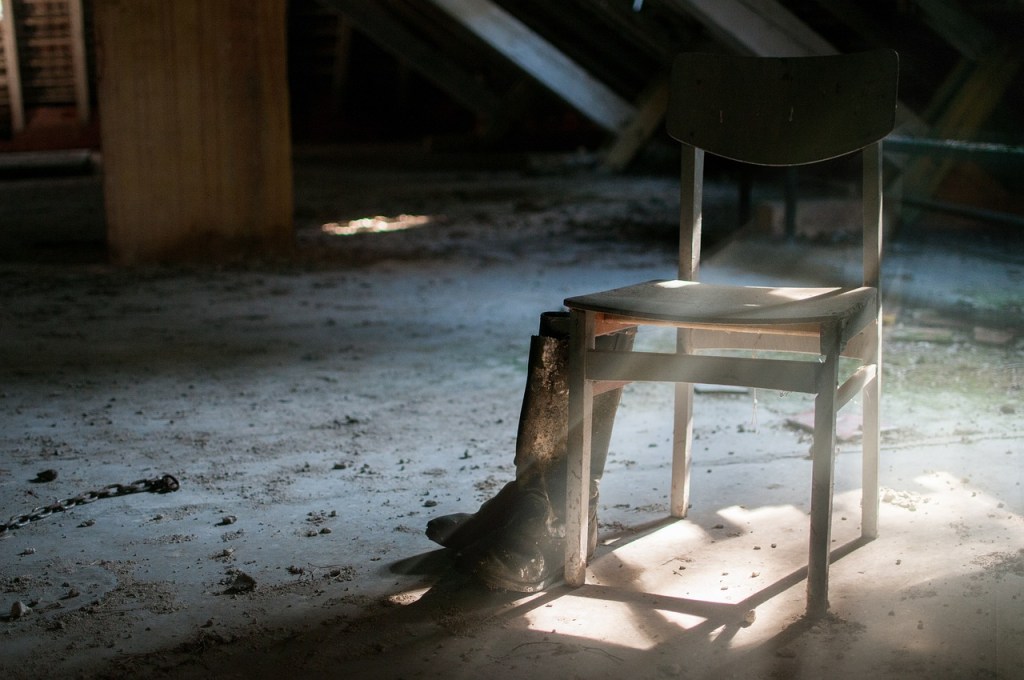
- the entrance of sin: image-bearers given freedom to choose and make bad decisions
- everything that was good becomes stained – there is ‘the fall’ – ‘paradise lost’
- guilt (human heart – “ground zero”) and evil (systems – corruption) become a reality
- judgement is a reality (in the ongoing present and the distant future)
- shame
- death and suffering (‘pain of childbirth’; ‘toil of the earth’)
- relationships, all four of them experience brokenness – as Genesis 3-11 describes…
- rebellion marks the relationship with God – separation, hostility; a chronic inability to remain obedient (all the way to the end of the Old Testament);
- male and female relationship produces conflict in family which spreads into community;
- Cain and Abel leads to Babel and Flood: breeding oppression, alienation, abuse
- environmental crises mark the relationship with creation
stewardship is sick – care is disregarded – creation begins to ‘groan’
- ‘image of God’ is overwhelmed by a ‘disastrous self-centeredness’ and confusion
- depravity stains the dignity: ‘not that in every way we are as bad as we could be, but that in no way are we as good as we should be’
- “those made by God like God and for God begin to live without God”
- The OT is marked by repeated efforts by God to bring this under control: from the Law and the Covenants to judges and prophets and priests and kings and the entire created world becomes unstuck.
The NEW chair

It is about the gospel – but where does it begin? When does the new commence? With the arrival of Jesus?
No – much earlier…
- salvation predicted (Gen 3:15) the protoevangelion (first light of the Gospel)
- salvation initiated (Gen 12 – Malachi)
- salvation completed (Gospels) – ‘when the time had fully come’ (Gal 4:4)
- salvation celebrated (Acts – Epistles)
… ‘the repairs are under way’ as early as Genesis 12; restoration begins – it is a rescue story
- promise, covenants, law, prophecy–priesthood–kingship’, wisdom, ‘redemption history’
- incarnation: the love of God in Christ makes salvation possible
- life & ministry: arrival of Kingdom with the possibility of God (as King) reigning in world
- advancing God’s ways, God’s values, God’s principles – the Sermon on the Mount (Matthew 5–7); the parables
- death & resurrection: the cross and what it achieves: reconciling, justifying, redeeming:
- something new becomes possible which begins to reverse every influence of ‘the bad’
however far sin/evil reaches is how far grace reaches – already real, but not yet fully
- not just a follower of Jesus: ‘through, in, with, under, for, like’ Christ
- “What does it mean to be saved? It means eternal living here and now, a life of interaction with Jesus here and now, and that’s the only description of eternal life in the New testament, John 17:3” Dallas Willard
- the age of Spirit & Church (Acts & Letters): ascension (making ‘greater works’ possible);
- sanctifying and glorifying; spreading across time zones and down through centuries in mission . . .
The PERFECT (or complete) chair

It is about the second coming of Jesus (Revelation 21 & 22)
- 1 Corinthians 13.10 – ‘when the perfect comes’ . . .
- the ‘new’ is not the end (just a deposit, a down payment) – we already experience
- restoration and freedom and healing, but we have yet to experience it in full
- the certain hope of this fullness
- as surely as dawn follows midnight, spring follows winter – keeps us longing, waiting, groaning, trusting, thirsting in the meantime – until (and for) the day of Jesus’ return
- a destiny: Jesus returns to raise the dead, judge the world (punishing wrong–doing and vindicating right–doing – for eternity), and restore all creation; wholeness; Psalm 96 – 98
- God is in control (Revelation 1:8)
- Jesus wins – ‘the slain lamb standing at the centre of the throne’ (Revelation 5)
- all salvation words have past, present and future meaning:
- still will be saved, freed, resurrected, cleansed, healed . . .
- no tears, no pain, no death, no decay, no sin, no brokenness: it is called the new heaven and new earth
- age of Spirit and Church keeps spreading: so every tongue, every people is in heaven
Pause and reflect
How does that land for you? What do you notice? What is catching your attention…what do you want to pause with and tease out a bit? Where do you find yourself asking for context, clarification or just basically not in agreement?
When we meet together we’re going to play with the chairs….looking forward to seeing what emerges.
[1] This concept of the “Four Chairs” and these notes are the work of Rev Dr Paul Windsor (Global Director – Langham Preaching; paul.windsor@langham.org). They are being used here with minor adaptions by Geoff New and Darryl Tempero and with permission.
 an unusual book club