

The resources
I’m in a strange place right now, and as I consider this place, I am aware that my ‘right now’ actually started a while ago. I’ve been in a strange place for a season – and while my journey into this space has its unique quirks, I know that I’m in good company. Lots of people have been veering off the ‘straight and narrow’ way that was laid out as ‘the only way’ to follow Jesus.
When we first began the book club, I said I was fed up of the small group bible study type of experience where we answer inane questions that amount to ‘what does it say in verse 4?’, or that invite us to trot out the accepted ‘right’ answer to confirm that we are all on the same page and all on the right track. I wanted to find a way of engaging with sacred texts that allowed us to connect with our stories, our questions and our daily living so that we were enriched – by the sharing and by being heard and by expanding and deepening our engagement. And I wanted to affirm that a sacred text might be anything – a movie; a tv series; a book; a poem; a song; an image…even and especially your own inner landscape. All of these are windows into Being – maybe more so for those of us who have had our scriptures used against us in some way.

I’ve been exploring what it means to listen for Spirit’s voice speaking in all of these things for some years now, and you’ve been my companions on that way. I can’t say how deeply grateful I am for this (yes, words actually do fail me.) And I know that you value this space and this company too.
We are approaching the end of our fifth year and having finished that exploration of Christianity after Religion, I have been considering what direction today’s post might take.
The materials I’ve been engaging with and the conversations I’ve had lately share some common themes that mostly come down to this – how (and even why) do we read (and interpret) the Bible. I paused here for a while before writing more….when I published that first post, some of you were not especially keen to engage with the Bible at all – I get that. But Nadia Bolz-Weber is persuasive:
scripture and theology are too potent to be left in the hand of those who only use them to justify their dominance over another group of people.
An Evolving Faith Sermon
And Meredith Miller has recently published a book which I am about to start reading – Woven: Nurturing a faith your kid doesn’t have to heal from. I know it is too late for this to make a different to my kids, and at the same time much of my own faith was formed and shaped in a way that I have had to heal from. There are half submerged things I was told and took on board that still trip me up or fill me with doubt or drag me into a spiral of guilt and shame that, even when I can see it happening, I find hard to side step. My thinking and understanding and living have changed, but I haven’t thoroughly reframed this new house of belonging – and I recognise that it’ll be an ongoing project because (until I attain sustained mystical union) I’ll always be expanding my perspective.
So, if it’s ok with you, and of course you might want to observe rather than participate, I’m going to end this year revisiting scripture and reforming how I believe what I believe about it. The transition from ‘the old model’ through that narrow nadir of the U means leaving behind some (all?) of the old ways of thinking and knowing and doing and finding new ways. I think maybe new ways have been found before the old things have been truly left behind, and so there is a period where both are functioning – this is what it has felt like to me. Sometimes I forget what I don’t believe any more and find myself unsure how I am making sense of things, sometimes the new perspective feels absolutely right, and still too fragile and not fully embedded to give me a sense of sacred groundedness to speak from.

I hope that makes sense…..and so to begin with, I want to explore some different ways of approaching and engaging scripture.
Pause to reflect
How were you taught (perhaps overtly, perhaps implicitly) to view and understand the Bible? Here are some words you have probably come across in relation to this: authoritative, inerrant, literal Word of God, infallible and inspired – what do these mean to you and what approach did you start out with – was it a blend? What kinds of things did you learn about the Bible and what did you learn from it – was it presented as a history, a guidebook, a ‘science’ book, a unified whole, a collection of collections? What has changed for you? What has that journey been like for you?
Faith – a relationship of trust
Meredith references ‘Soul searching’, a book that came out in 2005 , and which surveyed teens in the USA. The research revealed that most of what passed for faith in this group could more accurately be termed ‘Moralistic Therapeutic Deism’. Moral codes are about being good, doing the ‘right’ thing and thereby being a ‘good’ person. Therapeutic refers to the fact that this religious behaviour and attitude is meant to make you feel better (because you are trying to be good, and also you can feel better about yourself when you know that others are not as good as you.) It is Deistic, rather than theistic, because the God who set the moral codes is understood as Deus ex machina – essentially removed from the daily reality of life but might put in a special appearance now and then if you need help (and have been good enough).
This kind of ‘faith’ puts a high premium and strong emphasis on right Belief and obedient Behaviour (not just from kids) and parents were given the impression that obedient children were a sign of good and godly parenting. This is what ‘Father God’ expects of his children (of all ages).
This framing feels uncomfortable in that it isn’t what I was taught exactly, but it is more or less what I learned. Obedience is a bit triggering too. Does God (really just) want people to obey? Why? And who benefits?
What if it’s not true in the way that we’ve been led to believe it’s true? How might we benefit if we understood this differently – in a different framework? What are the elements that need to be unpacked and reformed here for you? For me, I sense…humility, worthiness, surrender, liberation, submission, grace, and trust.
Whole body lectio
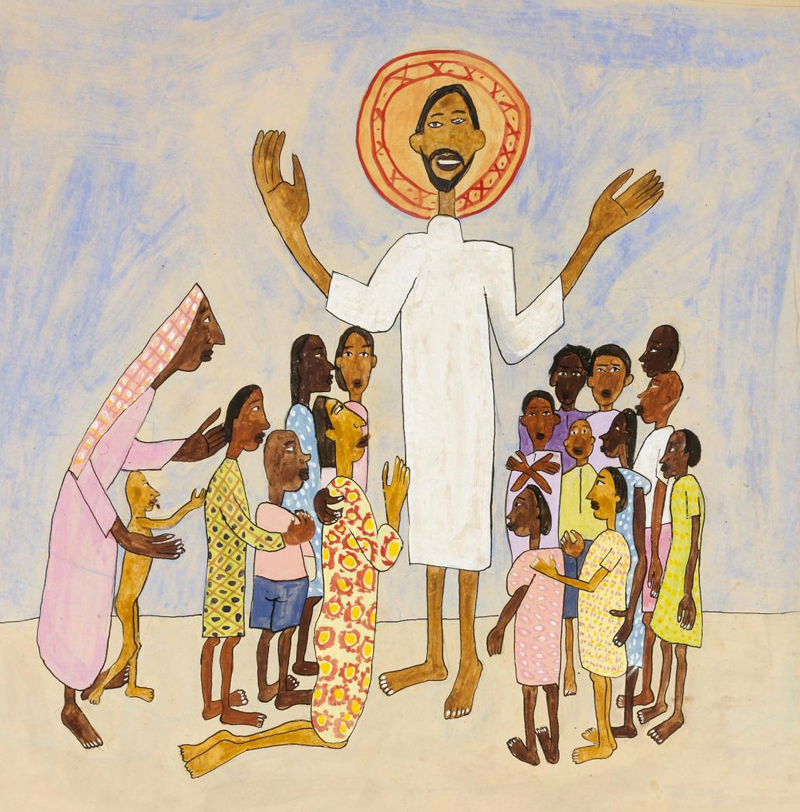
Read the passage below slowly two or three times – you could say it aloud and listen to the sound vibrations with your whole body…
13 Some people brought children to Jesus so that he would place his hands on them and pray. But the disciples scolded them. 14 “Allow the children to come to me,” Jesus said. “Don’t forbid them, because the kingdom of heaven belongs to people like these children.” 15 Then he blessed the children and went away from there.
Matt 19
Where do you feel this in your body?
Is there a part of you that wants to come near to Jesus so he can hold you? A part that wants to hold back? What are those parts telling or showing you about trust in your relationship to the Divine?
And, having listened to what your body is telling you in response to scripture, what do you notice about how this intersects with the reflections above?
The practices
Prayer of the heart
Many of the Desert Fathers and Mothers, along with thinkers and mystics in the Eastern Orthodox tradition, have described prayer as bringing our thinking down into our heart. It is not the words themselves as much as the rhythmical repetition that localizes one in the heart. It is the same with the rosary. One cannot “think” Hail Mary 50 or 100 times. There is no content to “think” after a few recitations! Chants and repetitive prayers are, in fact, a technology to help you stop thinking! And it works.
Richard Rohr adapted from Following the Mystics through the Narrow Gate
This repetitive prayer also protects the mind from its own merry-go-round of reactive thinking, the ‘content’ of which is entirely generated by the personality. Trust yourself into the deeper spaces, guided by the repetition of a mantra.
Weaving your own Web
Trust is not a given, and the God you were given may not be worthy of trust…if you were taught you needed to be good rather than to know the God who IS good, then you may need to spend time identifying your stories of God with you, weaving them into the bigger web of stories of the One who is Love. There are so many ways you might do this, and it’ll be an ongoing work because there will be some threads to pull out as well as bringing other hidden ones to the surface – here’s one suggestion
- take a sheet of paper (or several) and starting with your birth, mark off eras, or seasons of your life. These might be decades, but more likely there are significant events that triggered a shift, a transition, a decision or an accident that sent you into a new direction and began a new ‘era’ for you. Then, take some time to reconnect with the events of each season in turn. You’ll probably want to do this slowly, as you recall and consider where you felt God with you – perhaps through the presence of other people or events, perhaps as a felt Presence, perhaps through a particular scripture; what are your stories of connection and holding from this time; what are the memories of peace, love, joy, belonging? You might find it helpful to also identify any stories of disconnection, guilt and shame, and start wondering… who benefits from those stories? What if those stories are not true in the way that you were led to believe?
Hold all of this gently…see below. You will not finish this weaving work in one session, but it’s good to begin.
In a nutshell – visio divina
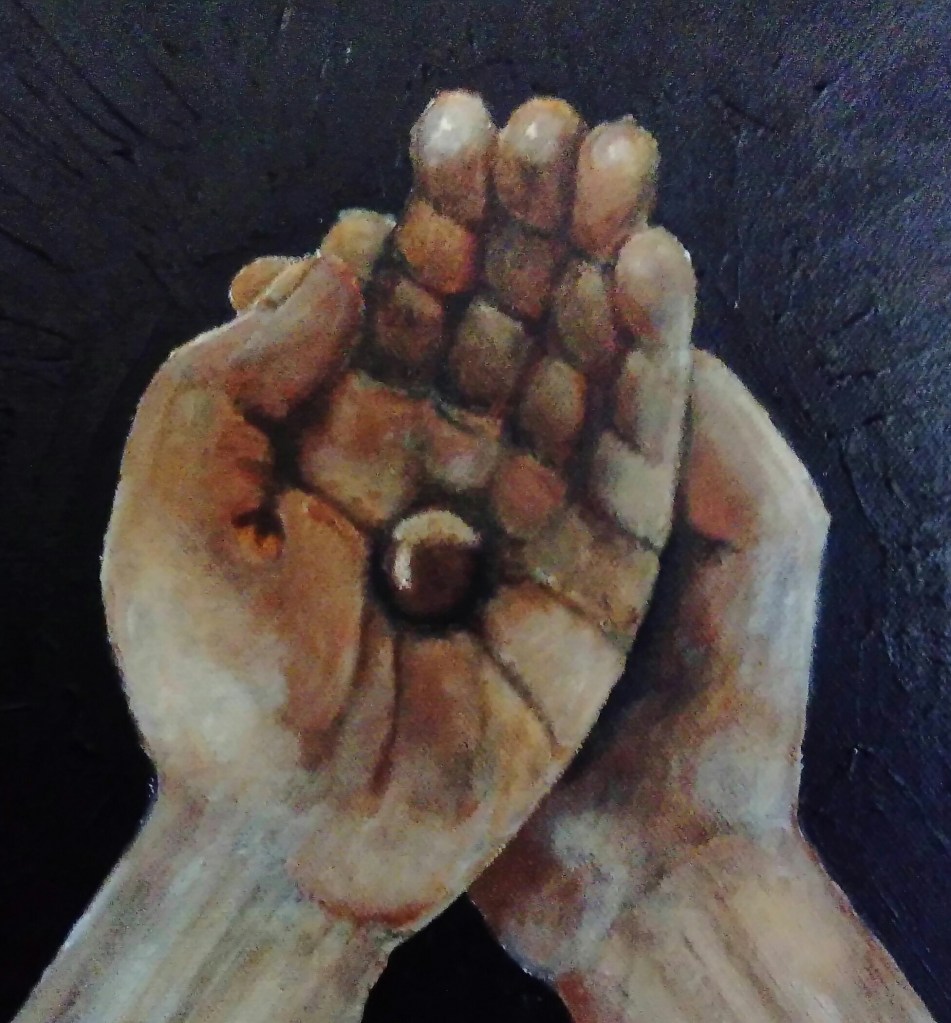
And in this he showed me something small, no bigger than a hazelnut, lying in the palm of my hand, as it seemed to me, and it was as round as a ball. I looked at it with the eye of my understanding and thought: what can this be? I was amazed that it could last, for I thought that because if its littleness it would suddenly have fallen into nothing. And I was answered in my understanding: It lasts and always will, because God loves it; and thus everything has being through the love of God
Julian of Norwich
This might help as we pray for our fragile little planet and all living things.
 an unusual book club
How beautiful, Roxy! I happened upon your website this week and have been soaking in your reflections…
LikeLike