

The Resources
There’s a big, long quote from Diana’s book Christianity after Religion which she says is the most quoted part of the book. I am going to pull out bits of it for you, add comments and reflections and precis some parts. If you have the book you can also read the relevant pages, chapter 7, p202-204.
Winfred Cantwell Smith notes that faith became both intellectualized and impersonalized, as “decade after decade the notion was driven home that a religion is something that one believes or does not believe, something whose propositions are true or not true.” As he further states, “A legacy of it is the tendency still today to ask, in explanation of ‘the religion’ of a people, What do they believe?—as though this were a basic, even the basic, question.”
The belief part is where we begin – agreeing or disagreeing are foundational to faith. This has always been true, though, I think. From very early in Christian history – I mean from the beginning – people who believed wrong were excommunicated (which was understood as eternally excluded from communion with Christ) or actually ex-ed. Wrong belief was seen as a threat. Our history likes to gloss over this, but violent response to wrongness was there from the beginning (which makes sense, given the times.) And it’s also important to note that the opposite is true – nonviolent response was there too.
Anyway, Diana goes on to reflect on how odd it is that we start with belief when we approach faith. “Follow me” has morphed into “believe in me”. Again, this happened very early. Peter’s Pentecost sermon isn’t about how the Kingdom of God has come near and here are some parables that Jesus used to tell. No. Jesus’ teaching does not feature, but the credentials of his being sent by God which was attested to by signs and wonders, his being crucified, dead and buried and raised to life, made Lord and Messiah – these are the key elements. And NOW believe, repent, be baptised in his name.
It’s not hard to see how we ended up with BELIEF in first place. But I love how Diana reframes this and shows us how arse-about-face that is:
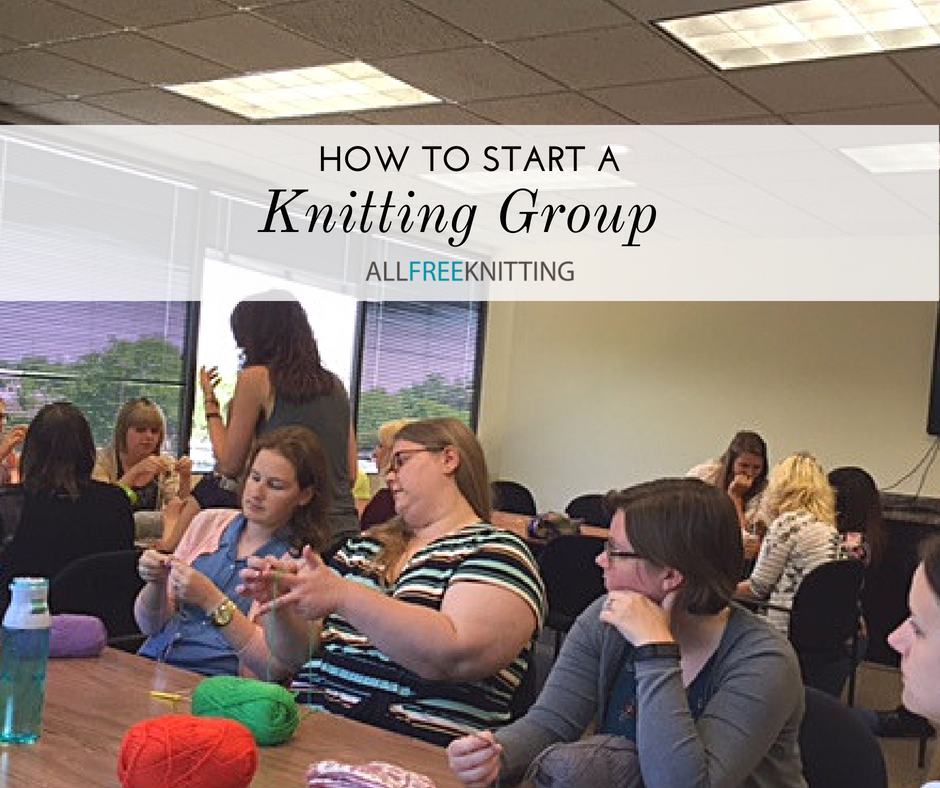
Imagine joining a knitting group. Does anyone go to a knitting group and ask if the knitters believe in knitting? What do they hold to be true about knitting? Do people ask for a knitting doctrinal statement? Indeed, if you start knitting by reading a book about knitting or a history of knitting or a theory of knitting, you will very likely never knit.
If you want to knit, you find a knitter to teach you. Go and sit in a circle where someone will talk to you, show you how to hold the needles, guide your hands, and share their patterns with you. The first step in becoming a knitter is forming a relationship with knitters. The next step is to learn by doing and practice. After you knit for a while, after you have made scarves and hats and mittens, then you start forming ideas about knitting: you might come to believe that the experience of knitting makes you a better person, more spiritual, able to concentrate, gives you a sense of service to others, allows you to demonstrate love and care. You think about what you are doing, how you might do it better. You develop your own way of knitting, your own theory of the craft. You might invent a dazzling new pattern, a new way to make a stitch; you might write a knitting book or become a knitting teacher. In knitting, the process is exactly the reverse of that in church: belonging to a knitting group leads to behaving as a knitter that leads to believing things about knitting.
Relationships lead to craft leads to experiential belief.
This is the path of transformational growth. It’s the opposite of the usual approach – belong, behave, believe. And Diana writes they all three go together even though you may like to focus more on one and let one of the other two slide out of focus more.
The shift we’ve been seeing from the traditional believing first approach is explained in terms of moving from a group identity (nation/family/religion) to an authentically personal choice. The internal authority replaces the external. There’s a shadow side to that, of course, as there is to the group identity, and it’s not about which is better or worse for us, because the reality is that the shift is here and is impacting us and our faith journeys. (and our churches).
So then it becomes more important to consider and explore how the three Bs have shifted:
SHIFT 1: BELIEF – WHAT to HOW
Away from external belief toward experiential belief: The question changes from WHAT do I (or we) believe? to HOW do I (or we) believe?SHIFT 2: BEHAVIOR – HOW to WHAT
Away from rules toward creativity, improvisation, and practice: The question changes from HOW do I (or we) do that? to WHAT am I (or are we) going to do?SHIFT 3: BELONGING – WHO to (WHERE) AND WHOSE
Away from “I think, therefore I am” toward locational and relational identity: The question changes from WHO am I? to WHERE and WHOSE am I (or are we)?
Pause and reflect
What have your shifts been in the three Bs? Are they represented here? Where have you experienced these shifts and when…and what happened?
What do you see happening for you next, and does that relate to what you believe, where you belong or how you behave?
Diana then says..
Membership is not ‘belonging’. This is something that is hard to get past when it comes to faith and it’s something to do with the difference between setting up camp and being on a journey. So much of church life is about the place. Going to church, at church, in church etc. And the idea that we are on a journey of faith, an every day, everywhere, everything kind of movement, and that we find one another on the way and we journey together… sometimes for a long time, sometimes for a season and sometimes just for a moment – this is hard to give weight to when so little of it happens ‘at church’.

After all, Jesus said, “Follow me,” not “join a church.”
And, as in the New Testament, following comes first. Friendship comes first. Leaving your old self at the side of the lake and discovering who you really are in a community of love, learning, and service is the vision of the gospels. “Behaving” and “believing” come as you find yourself on the journey.
Faith is primarily about identity. That is why it is so hard to change, so powerful to let go, or so meaningful to “deconstruct.” And the pathway into a new sense of identity is most often acceptance, friendship, and love.
Where are you on the journey? Who is with you and for you?
There’s a lot going on in the USA with regard to shifts in identity formation – which political party you belong to, what you believe about the news or who you support and why. The clarity of the past is gone and in the shifting sands of loss of belonging, loss of belief and changing behaviours it’s a national identity crisis unfolding while people still attempt to find purpose and make meaning for life.
What is happening in NZ is also similar, if smaller scale.
Diana finishes this piece by noting that until there is clarity about who we are there can be no cohesive action to solve problems, no shared understanding of what to believe about ‘God, love, justice, our neighbours or the future’. (I have added a u in neighbour for her, I hope she doesn’t mind).
And you can’t force “belonging” on others. You might companion others. You might mentor them. Perhaps be a trail guide. But, eventually, people really, truly have to figure it out for themselves.
I’m of a mind that’s where faith communities could help. Like knitting groups.
The practices
Try crafting
Don’t look this up on Youtube. Pick a craft you have never tried before, or even one you have tried but not really got the hang of and ASK SOMEONE TO SHOW YOU how to do it.
‘Craft’ could be anything you like. See what happens.



Say no and say yes
One of the practices that Barbara Brown Taylor admitted feeling a sense of ‘holy envy’ for is the Jewish practice of Sabbath. Of course, the Christian faith inherited this practice as well (or did we appropriate it?) but even though I grew up with Sundays being the day when nothing happened it was never an actual sabbath day. It was not a day for being.
The practice of sabbath, of being, reminds us who we belong to and with…
We belong to God and we belong to each other. God does this; we do not choose or earn our belonging, and we cannot lose it. We are not defined by what we do, but by the love of God.
How do we remember and practice our belonging? We rest. We stop doing and just be. Rest is practicing trust. When we stop and the circus carries on without us, we practice trusting that God is God and we are not. When we are with the people we love without rushing or achieving—simply being ourselves with one another—we practice trusting that we are loved not for what we do, but for who we are.
Resting makes us available to the holy moments when they arrive: gut-busting laughter, languid ease, delighted connection, a rush of gratitude, a spark of wonder. Resting regularly and intentionally trains us to notice and receive these moments more often— even in the ordinary, busy times.
What if, this month, you looked at the calendar and blocked out one day for Sabbath?
make a YES and NO list.
youthfront blog this is taken from a post connected to a really interesting Presbyterian Church in Lake Nokomis Minnesota
- Say YES today to what brings you joy and reminds you of your belonging to God and other members of your family/whanau.
- Say NO today to what dulls your senses and disconnects you from yourself, God and others.
- Invite your others to remind you what you’ve said YES and NO to when you forget.

 an unusual book club