
The Resources
Last weekend I was in Queenstown in the breathtaking beauty of the mountains and the lake and the fresh clean air. It was a working weekend, though, as I was part of a group discerning calling to ministry. In the preparations for the weekend, I was asked to lead a devotion, and as I had the first slot at the start of our two day process, I thought it would be helpful to offer a practice that could be returned to through the coming days as a way to restore calm and return to Presence. I remember being at that weekend as a candidate and it was nerve wracking. There were moments of terror right before the impromptu speech activity, when I was beyond worried that I’d pick two scenarios that were beyond my ability to speak about or into with any shred of intelligence. There was some awkwardness in the group exercise where the candidates fell over our own feet to be ‘pastoral’ and also ‘show leadership’. And through it all anxiety was a constant hum in the background of my being. So I wanted to offer something that might, even if just for a few moments, cut through all of that whirling churn of thoughts and emotions.
There’s only one thing I know of that can do that – one path that always leads home. It’s breath, of course. So I offered a breath prayer.

My yoga teacher, Theresa, reminds me that breath is the only involuntary, autonomic body process that we can consciously shift. Your heart beats. You do not think about it. You do not make it happen by thinking about it. You cannot stop it by thinking about it. You can speed it up or slow it down, but not in a direct and ongoing way. Also, your digestive system digests. It is certainly affected by the interplay of your mental patterns and your emotional states but when it slows down you cannot speed it up with a conscious effort of will, nor can you choose to slow it down when it’s on a roll.
But the breath….the breath responds to your attention. The breath is always an open door into the present moment, the moment where air is flowing, where life is unfolding, where you are experiencing the wonder and givenness of this being alive, of this Now.
And when you bring attention to the flow there is an ongoing receiving and letting go. You don’t make any of it happen. You receive breath – it’s given. You let it go – it’s given back. You’ve been doing this since you were born and you’ll keep doing it until that last breath is surrendered. It’s a lifetime practice of receptive surrender.
I want to say that you can’t hoard the breath. You can’t store it up for later – but technically, you can. In “the French art of not trying too hard”, one of the examples of this not trying too hard is taken from free diving. Ollivier describes the approaches of three different free divers all trying to set the record for the deepest dive. In order to successfully set that record, you have to go down and come back up in one breath and, if you happen to lose consciousness on the way up or if you cannot complete the Surface Protocol (keeping your airway out of the water, removing any mask/nose clip, giving an ok hand signal followed by a verbal ‘I’m ok’) then your attempt is disqualified.
The Frenchman’s approach is characterised by relaxation. He trained first as a boy with his brother, pretending to be pearl divers and then with a dolphin who, he says, he fell in love with. When he is in the water, he is almost playful, delighted, full of wonder and gratitude which puts him at ease. He can take his time, diving down to 105m and in no hurry to return to the surface.
His rivals at that time included an American military instructor in the navy who taught recruits how to get out of a submarine in difficulty on the sea bed, and an Italian…no mention of his background. The American trained in a water tower using a lung packing technique where you force more air into your lungs even though they are full. The Italian used hyperventilation, drenching his red blood cells in oxygen and reducing the carbon dioxide levels in the blood which delays the respiratory reflex. He also walked very slowly up and down three flights of stairs while holding his breath and wearing huge weighted belts.
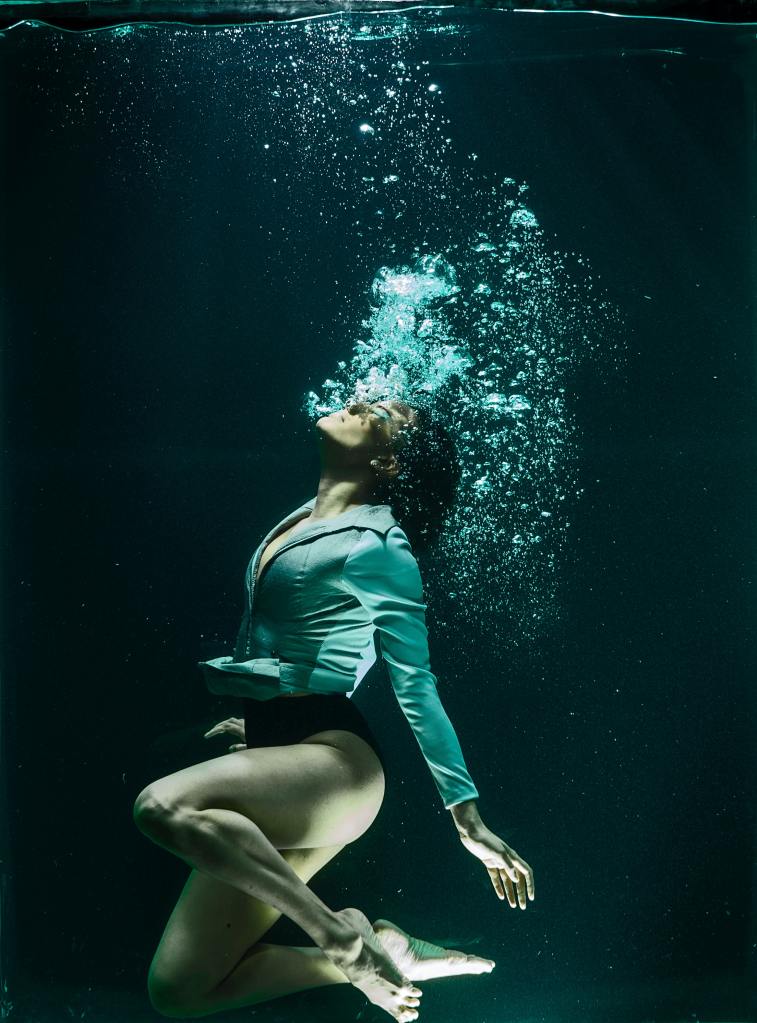
Both of these methods involve struggle – the temptation to breathe is met with resistance bound and braced by willpower. Ollivier describes the difference between these approaches as the negative world of will, suffering in stairwells (you have to resist), and the positive world of desire, playing for hours with someone you love (deep down there is calm and love).
I guess that means we can use the breath prayer in two different ways. An efforting way, and a relaxed way.
This is probably a good time to watch this beautiful video and also watch what thoughts, feelings and sensations arise as you are watching.
With regard to effort and relaxation, I had a moment of AHA! in a yoga class last week, as Theresa led us in a butterfly stretch. She gave all the cues for deepening the stretch including engaging particular muscles and adding props to allow the body to feel supported into extension. Then she reminded us to relax those parts that weren’t contributing to the stretch – it always amazes me how much my shoulders and jaw want to join in even when they have no way to add to the opening and usually I am engaging those muscles without my realising it. So, as I was consciously relaxing my neck and shoulders, Theresa said something very wise like:
‘apply the effort just where you need it to open and expand. Effort used consciously creates transformation. Unconscious effort is tension.’
I found that so helpful. I’m efforting into the stretch, for sure, but only to a place where there is no reactive resistance. When I’m efforting attentively, I’m truly feeling my body sensations and feeding my body with the breath – opening, receiving what is freely given, and then letting go, giving back and easing into the release. This is true for yoga. It’s also true for life.
Pause to reflect
What happens for you when you bring conscious attention to the breath? Does it feel all effortful or all relaxed or something else?
Journal about your sense of the will and desire aspect of your spiritual practice and spiritual growth journey – what is effort, what is relaxation, what props do you need to feel supported into expansion? And how are you being drawn by the deep calm and love?
How do you discern what it is that you truly want – in spiritual growth and in life? And how do you hold the wanting in receptive surrender?
The practices
A breath prayer
I think you know how this works….but see if you can spot when the love/effort thing is acting in your practice. This one is from Sarah Bessey.
Inhale: I release my need for control
Exhale: I trust your goodness and purpose will prevail.
The sacred Name
Have a watch of this video clip of Father Richard Rohr as he shares his deepening appreciation of the mystery of the ‘I am who I am’. Spoiler: it’s a breath prayer. How might you integrate this into the flow of your life?
Breathing compassion
So, it might just be me, but this short breathing meditation from the Centre for Mindful Compassion is so powerfully healing it had me sobbing the first few times I did it. I hope that self disclosure didn’t put you off giving it a try. It probably is just me.
 an unusual book club